Just had sinus surgery? You probably have a lot of questions. When can I get back to work? How long will this take? What am I actually supposed to do while I recover?
Fair questions. The surgery itself is really just step one — recovery is where the real work happens, and it’s usually the part nobody feels quite ready for.
So let’s talk through what sinus surgery recovery actually looks like, from the first few days through the following weeks — in plain terms, without making you panic over every little twinge.
The First Few Days: Rougher Than You’d Expect
Right after surgery, your body needs time to settle down. Many patients go home the same day through ambulatory surgical care, which means they don’t necessarily need to stay overnight in the hospital.
But “outpatient” doesn’t mean “easy.”
The first 48 to 72 hours are often the most uncomfortable part of recovery. You may notice nasal congestion, mild bleeding or blood-tinged mucus, facial pressure, swelling, tiredness, or a headache.
That doesn’t automatically mean something is wrong. Your nasal and sinus tissues have just been treated, so some discomfort is expected.
For these first few days, focus on resting. Keep your head elevated when lying down, avoid bending over, and don’t blow your nose unless your ENT specialist tells you that it’s safe.
If you need to sneeze, try to keep your mouth open. This helps reduce pressure in your nose and sinuses.

Types of Sinus Surgeries and Recovery Time
Not every sinus operation is the same, so recovery can vary considerably. The type of procedure you have is one of the biggest factors affecting sinus surgery how long to recover.
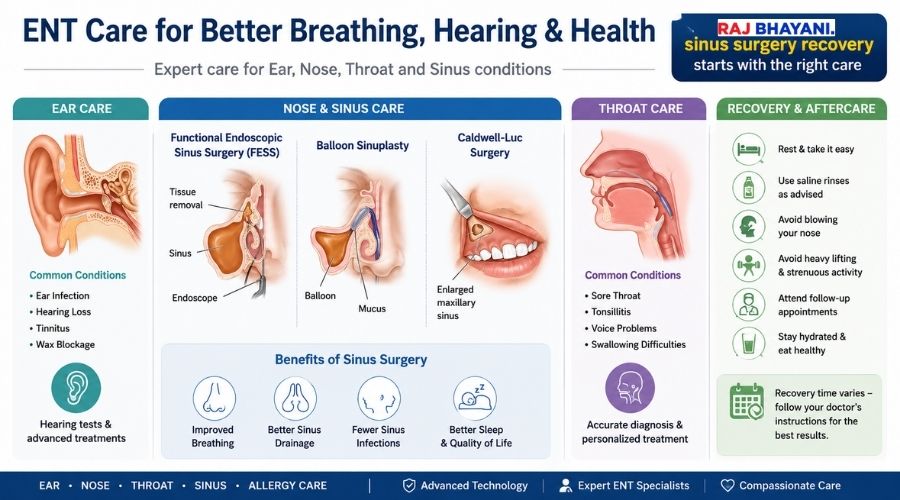
Functional Endoscopic Sinus Surgery (FESS)
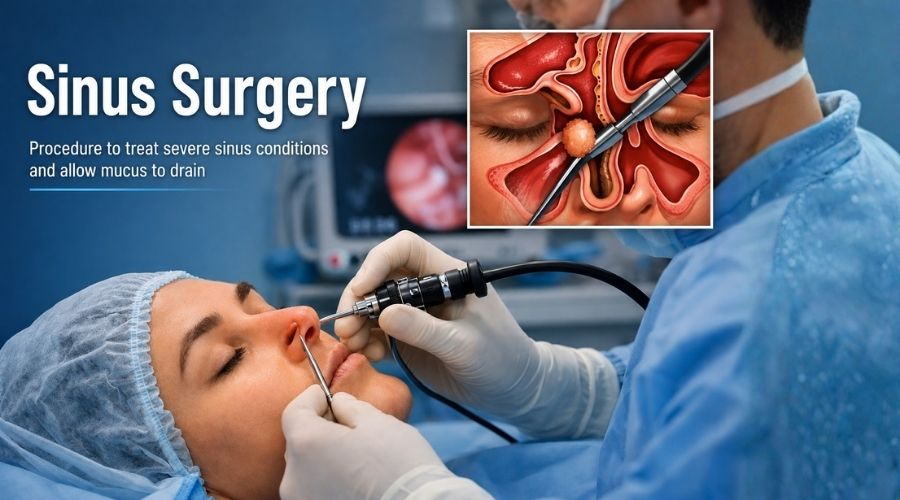
FESS is commonly used to treat chronic sinus problems, blocked sinus passages, nasal polyps, and other conditions that have not responded adequately to medical treatment.
The surgeon uses a small endoscope through the nostrils to reach the affected sinus passages. There are no external facial incisions in most cases.
Many people take about a week away from work or their usual activities. However, the tissues inside the nose and sinuses can continue healing for several weeks, with more complete recovery often taking around a month or longer.
Balloon Sinuplasty
Balloon sinuplasty uses a small balloon catheter to gently open narrowed sinus passages. Because it generally involves less tissue disruption than some traditional sinus procedures, the initial recovery can be relatively short for appropriately selected patients.
Some people can return to light daily activities within 24 to 48 hours. However, feeling better quickly doesn’t mean the healing process is finished. Your sinuses may continue recovering for approximately two weeks or longer.
Caldwell-Luc Surgery
Caldwell-Luc surgery is a more traditional procedure that provides access to the maxillary sinus through the upper gum area. It may be recommended in specific situations when other approaches are not suitable.
Because this procedure can involve more tissue disruption, recovery is generally longer. You may need approximately two weeks before returning to work or normal daily activities, while complete internal healing can take several months.
Your ENT specialist will give you a recovery timeline based on the exact procedure you had and your individual circumstances.
The First Week: Slow, But Moving
By the end of the first week, many people begin feeling more like themselves. Swelling may start to decrease, congestion can gradually improve, and the soreness often becomes easier to manage.
This is also when follow-up care becomes particularly important.
Your ENT specialist will check how your nose and sinuses are healing and may remove crusting or debris if necessary. These appointments aren’t just routine paperwork — they allow your provider to make sure healing is progressing as expected.
Continue following your post-operative instructions even if you start feeling much better.
Depending on your procedure, your provider may tell you to:
- Use saline spray or saline rinses as directed.
- Keep your head elevated while sleeping.
- Avoid blowing your nose for the recommended period.
- Avoid strenuous exercise.
- Avoid heavy lifting.
- Stay away from smoke, dust, and other nasal irritants.
- Take prescribed medications exactly as instructed.
The exact instructions can vary, so your surgeon’s recommendations should always take priority over general advice.
Weeks Two Through Four: The “Almost There” Zone
This is probably the stage where patience gets tested the most.
You may feel well enough to return to work and your normal routine, but your sinuses are still healing underneath the surface. It’s important not to mistake feeling better for being completely healed.
Many patients wonder, “Sinus surgery, how long to recover?”
The answer depends on the surgery. Some people feel comfortable returning to routine activities within a few days, while others need a week or two. Internal healing can continue for four to six weeks or longer, particularly after more extensive procedures.
During this period, your provider may still recommend avoiding intense exercise, swimming, heavy lifting, or activities that significantly increase blood pressure.
Listen to your body and follow the activity restrictions provided by your surgical team.
A Few Habits That Genuinely Help
Nothing complicated here. A few simple habits can make recovery more comfortable:
- Use saline: Once your provider gives you the go-ahead, saline spray or rinses can help keep the nasal passages moist and clear.
- Drink enough fluids: Staying hydrated can help keep mucus thinner.
- Sleep with your head elevated: An extra pillow can make congestion and swelling easier to manage.
- Avoid irritants: Smoke, dust, strong fragrances, and other irritants can make your nose feel worse while it heals.
- Give yourself permission to rest: Even when you start feeling better, your body may still need additional recovery time.
- Keep your follow-up appointments: Your ENT can monitor healing and address problems before they become more serious.
Consistency matters more than trying to speed everything up.
Benefits of Sinus Surgery
Sinus surgery isn’t necessary for every person with sinus symptoms. In appropriate patients, however, surgery can help address physical blockages and improve sinus drainage.
Depending on the underlying condition and procedure, potential benefits of sinus surgery may include:
- Better drainage from blocked sinus passages
- Easier nasal breathing
- Fewer or less severe sinus infections
- Improvement in chronic sinusitis symptoms
- Treatment of structural problems contributing to blockage
- Removal of nasal polyps when appropriate
- Better access for topical medications to reach the sinus passages
- Improved comfort and quality of life when chronic sinus symptoms interfere with everyday activities
The results aren’t identical for everyone. Sinus surgery is designed to address specific problems, and symptoms can sometimes return depending on the underlying condition.
What “Normal” Recovery Actually Looks Like
One thing worth knowing upfront: recovery isn’t always a straight line.
You might feel noticeably better one day and then experience more congestion or mild pressure the next. That doesn’t necessarily mean you’ve gone backward. Healing can fluctuate, particularly during the first few weeks.
However, some symptoms shouldn’t simply be ignored.
Contact your healthcare provider if you experience:
- Pain that is becoming worse rather than gradually improving
- Heavy or persistent bleeding
- Fever or chills
- Significant swelling around the eyes
- Changes in vision
- A severe or unusual headache
- Difficulty breathing
- Symptoms that suddenly become much worse after initially improving
When in doubt, it’s better to contact your care team and ask than to assume a new symptom is part of normal healing.
Why Post-Surgical Care Matters
The quality of your post-operative care can make a meaningful difference in your recovery experience.
Whether your procedure is performed through an ambulatory surgical care center or another surgical facility, you should leave with clear instructions about medications, nasal care, activity restrictions, warning signs, and follow-up appointments.
A coordinated surgical care associates team can also help provide continuity between the procedure and follow-up care. Having your questions answered by a team familiar with your surgery can make the recovery process less confusing.
Most importantly, don’t compare your recovery too closely with someone else’s. Two people can have the same type of sinus surgery and still recover at different speeds.
Give It the Time It Needs
Sinus surgery isn’t something you can rush. Even when congestion improves and you start feeling normal again, the tissues inside your nose and sinuses may still be healing.
Follow your ENT surgeon instructions, attend your follow-up appointments, use saline treatments and medications as directed, and give your body enough time to recover.
The goal isn’t simply to feel better as quickly as possible. It’s to allow your sinuses to heal properly so you can get the best possible long-term benefit from the procedure.
Conclusion
Sinus surgery recovery takes time, but following your ENT specialist’s post-surgical instructions can help support a smoother healing process. Dr. Raj Bhayani ENT Surgeon, provides patient-focused ENT care and guidance to help patients understand their recovery. With proper aftercare and follow-up, most patients can gradually return to their
Frequently Asked Questions (FAQs)
Q1: How long does sinus surgery recovery actually take?
Most people feel noticeably better within a week or two, but full internal healing usually takes four to six weeks. If the procedure was more involved, recovery can take longer depending on your specific case and how your body heals.
Q2: Will I have to stay overnight in the hospital?
Usually not. Most sinus procedures are performed as outpatient or ambulatory surgery, allowing you to return home the same day. Your doctor will determine whether an overnight stay is necessary based on the procedure and your individual circumstances.
Q3: Is bleeding after sinus surgery normal?
Light bleeding or spotting during the first few days after sinus surgery can be normal. However, heavy or persistent bleeding is not expected and should be reported to your doctor or surgical care team promptly.
Q4: When can I get back to work or my regular routine?
Many people can return to lighter daily activities and work around one week after surgery. Strenuous exercise, heavy lifting, and other demanding activities may need to be avoided for several weeks. Your surgeon will provide guidance based on your recovery.
Q5: What are the benefits of having a coordinated surgical care team?
A coordinated surgical care team can make the treatment and recovery process easier to manage. When your providers have access to your surgical history, treatment plan, and follow-up information, communication can be more consistent throughout your recovery.
Q6: What symptoms mean I should call my doctor after sinus surgery?
Contact your doctor if you experience heavy bleeding, worsening or severe pain, fever, vision changes, significant swelling, or other symptoms that concern you. Mild congestion, drainage, and some discomfort can occur during normal recovery, but worsening symptoms should be evaluated by your care team.