
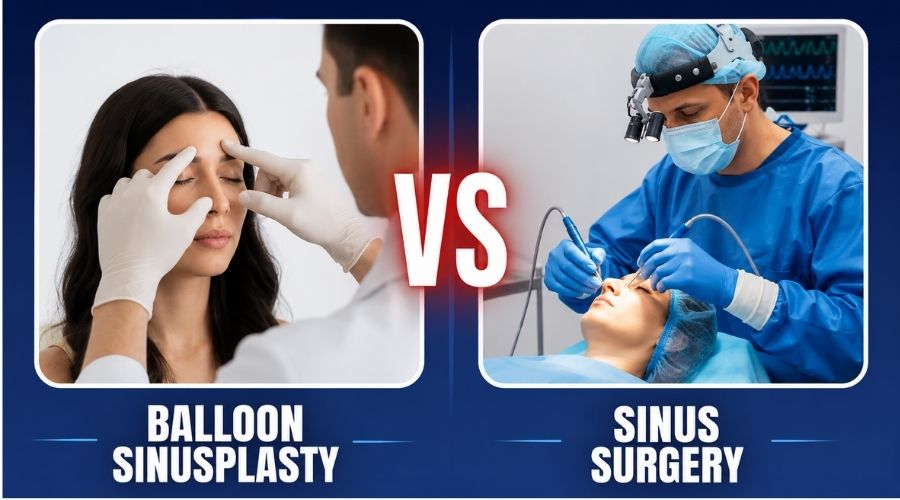
Antibiotics stop working. Rinses stop working. At some point a doctor brings up surgery, and two names usually come up in the same breath, traditional sinus surgery and something called balloon sinuplasty. Most people have never heard of the second one before that exact conversation. First thing they want to know, obviously, is whether it’s a real option or just some lighter version that doesn’t actually fix anything long-term.
What Balloon Sinuplasty Actually Is
Small balloon catheter gets threaded into the blocked sinus opening, inflated right there on the spot, gently widening the passage so it can drain the way it’s supposed to. No cutting involved. No tissue removed at all. Once the opening’s wide enough, balloon comes back out, space stays open on its own after that. People sometimes compare it to balloon angioplasty for a blocked artery, just aimed at sinuses instead of the heart, which is a decent way to picture it honestly.
Works best for one specific kind of problem though, a narrow or blocked sinus opening. If the real issue’s actually polyps, or a septum that’s badly out of line, balloon sinuplasty alone usually isn’t going to cut it.
Where People Get Confused
A lot of patients assume balloon sinuplasty is just a “milder” version of the same surgery, like choosing decaf instead of regular. Not really accurate. It’s solving a completely different problem than traditional surgery solves, which is why picking the wrong one for your situation just means doing this again later.
What Traditional Sinus Surgery Involves
Traditional surgery, functional endoscopic sinus surgery technically, goes further than the balloon does. Surgeon works through a scope with small instruments, actually takes out whatever’s blocking the sinus, polyps, diseased tissue, bone that’s grown too far into the passage over time. More thorough by design. For anything more complicated than a simple narrow opening, it’s usually the only option that actually addresses the whole problem rather than part of it.
Recovery takes longer here, week or more typically, sometimes packing or splints for a few days afterward while things heal into place properly.
Which One Fits Your Situation
Deciding factor always comes down to what’s actually blocking the sinus, not really a matter of preference. Balloon sinuplasty’s quick, can often happen right in the office under local anesthesia, people are usually back to normal within a few days. But it only solves the narrowing itself, that’s it. Scar tissue from an old surgery, polyps, real structural damage, the balloon just won’t touch any of that, traditional surgery becomes the only thing that actually gets it done.
Some patients genuinely need a mix. Balloon in one sinus, surgery in another, because each side of the face isn’t necessarily dealing with the same exact problem. Happens more than people expect.
Is It Permanent?
Sometimes, yeah. For a lot of patients the opening stays wide for years, breathing improves and just holds steady. But balloon sinuplasty doesn’t change the tissue itself, just stretches it open temporarily in a sense, structurally speaking. If allergies or chronic inflammation stay active and unmanaged afterward, passage can slowly narrow again over time. Not really a flaw in the procedure so much as a reminder, it’s treating the opening, not the reason the opening got narrow to begin with.
Long-Term Side Effects
Genuinely, there aren’t many. Most people feel a little sore, maybe mildly congested for a day or two, that’s about it. Serious complications are rare precisely because nothing’s cut or removed in the first place. Real long-term risk isn’t actually a side effect at all, it’s picking balloon sinuplasty for the wrong problem entirely. If the actual cause was polyps or something structural, symptoms just come back eventually, not because the procedure failed exactly, more because it was never the right tool for that particular job.
A few things worth knowing before deciding either way:
- Balloon sinuplasty won’t remove polyps, period, that requires traditional surgery
- Recovery time difference is real, days versus a week or more
- Insurance coverage varies depending on which procedure and why
- Repeat procedures happen more with unmanaged allergies afterward
Figuring Out Which One You Actually Need
Not something to guess your way through, honestly. CT scan plus an exam shows exactly what’s narrowing the passage, whether it’s simple enough for a balloon or complicated enough to actually need surgery. Age, general health, how much downtime someone can realistically afford, all factor in too.
Dr. Raj Bhayani, MD, bases his recommendation on what the imaging and exam actually show, rather than defaulting to whichever procedure happens to be quicker to schedule that week. With more than 25 years of experience at the New York Institute of Otolaryngology & Aesthetic Surgery, he practices out of Bensonhurst, Brooklyn, and Rego Park, Queens. Some cases really are straightforward. Others need the more complete approach, and getting that distinction right up front is honestly what determines whether the fix actually holds long-term.
If sinus surgery’s come up in your own case, worth getting a real look before deciding which direction makes sense.
Trying to figure out if balloon sinuplasty or traditional surgery fits your situation? Call the New York Institute of Otolaryngology & Aesthetic Surgery at (347) 342-1331, or book online with Dr. Raj Bhayani.
👉 Read More Blog: Sinus Surgery 5 Important Facts
FAQs
Q. Is balloon sinuplasty as effective as traditional sinus surgery?
For narrow sinus openings specifically, yeah, pretty much. For polyps or major structural issues though, traditional surgery’s usually the better fit, no real way around that.
Q. How long is recovery after balloon sinuplasty?
Few days typically. Traditional balloon sinuplasty surgery usually needs a week or more, sometimes longer depending on what got done.
Q. Can it be done in the office?
Often, yes, under local anesthesia. Some cases still call for an operating room depending on what’s involved, just varies by patient.
Q. Does it ever need to be repeated?
Can happen, yeah, if allergies or ongoing inflammation aren’t managed afterward. Passage can narrow again over time in some patients, not everyone though.