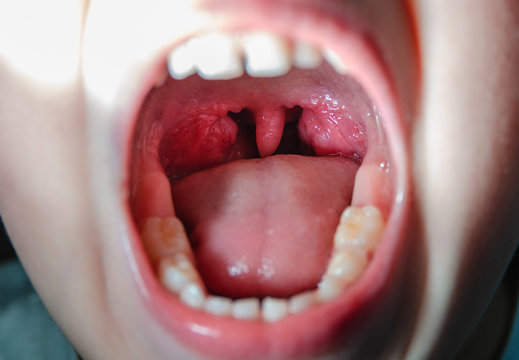
Enlarged tonsils in toddlers can quietly interfere with eating, sleeping, and growth long before parents suspect anything is wrong. Many families simply assume their toddler is a picky eater or a light sleeper, missing the connection to airway obstruction happening in the back of the throat. A pediatric ENT explains the signs that enlarged tonsils and adenoids may be affecting a toddler’s growth, and when it is time to seek an evaluation.
Why Enlarged Tonsils in Toddlers Often Go Unnoticed
Enlarged tonsils in toddlers develop gradually, which means the symptoms they cause tend to be dismissed as personality traits rather than medical concerns. A toddler who eats slowly, avoids certain textures, or seems unusually tired during the day is often labeled simply as a fussy eater or a low energy child. Understanding that these behaviors can have a physical cause changes how parents and pediatricians approach evaluation, particularly when a child is not gaining weight as expected. Because toddlers cannot easily describe what they are feeling, physical signs and feeding patterns often carry the most useful information. Pediatricians who see a toddler only briefly during a well visit may not have enough time to notice these patterns unless a parent specifically raises them.
The Connection Between Airway Obstruction and Growth
When enlarged tonsils in toddlers partially block the airway, the effort required to breathe and swallow comfortably increases, which can make mealtimes exhausting rather than routine. Some toddlers unconsciously eat less simply because chewing and swallowing around enlarged tissue takes more effort and comfort than they are willing to tolerate. Over time, this reduced intake can contribute to poor weight gain, a pattern pediatricians describe as failure to thrive when it becomes significant enough to affect growth curves.
What Failure to Thrive Actually Means in This Context
Failure to thrive linked to enlarged tonsils in toddlers refers to a pattern where a child consistently falls behind expected growth curves despite no other obvious medical explanation. This diagnosis is not about a single missed meal or a temporarily picky week, but a sustained pattern tracked over multiple pediatric visits. Once other causes have been ruled out, an enlarged tonsil and adenoid evaluation becomes an important part of understanding why a toddler is not growing as expected.
Why This Diagnosis Is Frequently Delayed
Because enlarged tonsils in toddlers are common and often harmless on their own, physicians may not immediately connect them to a growth concern unless a parent specifically raises the pattern of feeding difficulty alongside poor weight gain. Many families see multiple specialists, including gastroenterologists investigating feeding issues, before an ENT evaluation reveals the airway component driving the problem. This delay can be frustrating for families who sense something is wrong long before receiving a clear explanation.
Five Signs That Enlarged Tonsils May Be Affecting Growth
Certain signs, when they appear together, suggest that enlarged tonsils and adenoids in toddlers may be interfering with feeding, sleep, or growth. Recognizing this pattern early can help families reach an accurate diagnosis without months of uncertainty.
- Slow, effortful eating with frequent gagging or choking on solid foods
- Loud snoring or pauses in breathing during sleep
- Falling behind on growth curves despite adequate food availability
- Chronic mouth breathing, even when not congested
- Frequent waking at night or unusually restless sleep
Why These Signs Matter Together, Not Alone
Any one of these signs alone might have a simple explanation unrelated to enlarged tonsils in toddlers, but the combination of several together raises the likelihood that airway obstruction is playing a role. Pediatric ENTs look at this full pattern rather than a single symptom in isolation, since feeding difficulty and disrupted sleep frequently occur together in children with significant tonsil and adenoid enlargement.
How This Diagnosis Is Confirmed
Confirming that enlarged tonsils in toddlers are contributing to growth or feeding concerns typically involves a physical examination of the throat, a review of growth chart history, and sometimes a sleep evaluation if nighttime breathing concerns are present. In some cases, a brief in office examination using a small scope allows a pediatric ENT to directly assess the size and impact of the tonsils and adenoids. This evaluation helps determine whether the tissue is simply large or whether it is significantly narrowing the airway.
When Imaging or Sleep Studies Are Recommended
Not every toddler with enlarged tonsils needs a formal sleep study, but children with significant snoring, witnessed pauses in breathing, or ongoing growth concerns are often referred for one to clarify the severity of airway obstruction. According to the
American Academy of Pediatrics, evaluating sleep disordered breathing in young children is an important step before recommending surgical removal of the tonsils and adenoids. This additional information helps families and physicians make a more confident treatment decision together.
How Enlarged Tonsils Affect Sleep Quality in Toddlers
Sleep is one of the areas most consistently affected when enlarged tonsils in toddlers narrow the airway, since lying flat can make partial obstruction considerably worse than it is during the day. Parents often notice loud snoring, restless repositioning throughout the night, or unusual sleeping positions where a toddler’s neck is extended in an apparent effort to keep the airway more open. Poor sleep quality compounds feeding difficulties, since a tired toddler often has less energy and patience for the effort required to eat well during the day.
The Cycle Between Poor Sleep and Poor Feeding
A toddler who sleeps poorly because of enlarged tonsils often wakes up tired and less interested in the effort mealtimes require, creating a cycle where disrupted sleep and reduced eating reinforce each other. Breaking this cycle usually requires addressing the underlying airway obstruction directly, since improving sleep alone or feeding alone rarely resolves the full pattern. This is part of why pediatric ENTs evaluate both areas together rather than treating them as separate, unrelated concerns.
What Parents Can Track Before an Evaluation
Before a formal evaluation, parents can help their pediatric ENT by tracking specific patterns related to enlarged tonsils in toddlers, including how many nights per week snoring occurs, whether breathing pauses have ever been witnessed, and roughly how long meals typically take. This information, gathered over just a week or two, often reveals patterns that are easy to miss day to day but become obvious once written down. Bringing this record to an appointment can meaningfully shorten the path to an accurate diagnosis.
Treatment Options for Enlarged Tonsils in Toddlers
Not every toddler with enlarged tonsils requires surgery, and treatment decisions depend heavily on how significantly the tissue is affecting breathing, sleep, and growth. In milder cases, watchful monitoring alongside dietary adjustments may be enough, while more significant cases often benefit from removal of the tonsils and adenoids to restore normal airway function. You can read more about how our pediatric team approaches these evaluations on our
practice page at the New York Institute of Otolaryngology.
What Improvement Typically Looks Like After Treatment
Parents frequently report noticeable improvement in both sleep and appetite within weeks of their toddler’s tonsils and adenoids being addressed, sometimes describing it as watching their child eat and sleep normally for the first time. Weight gain often follows once feeding becomes easier and sleep quality improves, since both processes had previously been working against the child’s growth rather than supporting it. This turnaround is one of the more rewarding outcomes we see in pediatric ENT care.
Long Term Outlook After Treatment
Most toddlers who undergo treatment for enlarged tonsils and adenoids, whether through monitoring or surgical removal, go on to grow and develop entirely normally once the underlying obstruction is addressed. Catch up growth is common in the months following treatment, particularly in toddlers who had fallen noticeably behind their growth curve before diagnosis. Long term follow up with a pediatrician helps confirm that growth continues on track and that no additional concerns emerge as the child gets older.
Why Early Evaluation Matters So Much
The earlier enlarged tonsils in toddlers are identified and addressed, the shorter the period during which growth, sleep, and development are affected by ongoing airway obstruction. Waiting to see if a toddler simply grows out of the problem can sometimes mean months of unnecessary struggle with feeding and sleep that could have been resolved much sooner with an evaluation. This is why pediatricians and pediatric ENTs increasingly encourage families to raise these concerns early rather than waiting for symptoms to become severe.
Supporting Toddlers Through Diagnosis and Treatment
Watching a toddler struggle with eating or sleeping is stressful for any family, particularly when the cause is not immediately obvious. Enlarged tonsils in toddlers are a common and very treatable cause of these struggles once correctly identified, and most children recover quickly once appropriate care begins. Dr. Raj and the pediatric team at the New York Institute of Otolaryngology guide families throughout Brooklyn and Rego Park through exactly this kind of evaluation, helping toddlers get back on track with growth, sleep, and everyday eating